
If there is one thing that matters more than your marketing or sales capabilities when it comes to running a successful go-to-market engine, it’s the relationships you build.
Plenty of businesses are able to coast on positive word of mouth and referrals. And, even after you have built out mature marketing and sales functions, you still benefit immensely from partnership relationships.
I have been working on building a partner program for Attribution Academy, so the idea of tracking those partnerships in HubSpot has been very top-of-mind. I also managed the partnerships motion at Aptitude 8, which accounted for about a third of our revenue.
But there is an inherent tension in managing partnerships between two competing needs:
-
Transparency: Enabling partners to see relevant data about shared deals so they can help you close them.
-
Security: Protecting sensitive company data and not giving external users full access to your CRM.
Usually, this results in the "Spreadsheet Shuffle"—exporting data, emailing it, and having it be obsolete by the time the partner opens it.
That’s why I started looking into solutions that would allow me to create a dedicated partner portal, which is when I found Introw.
The HubSpot-Native Difference
Like my favorite tools in the ecosystem, they have leaned heavily into HubSpot's extensibility features to make the experience feel native. Because of that deep data sync, Introw allows you to share exactly what you want, without exposing what you don't.
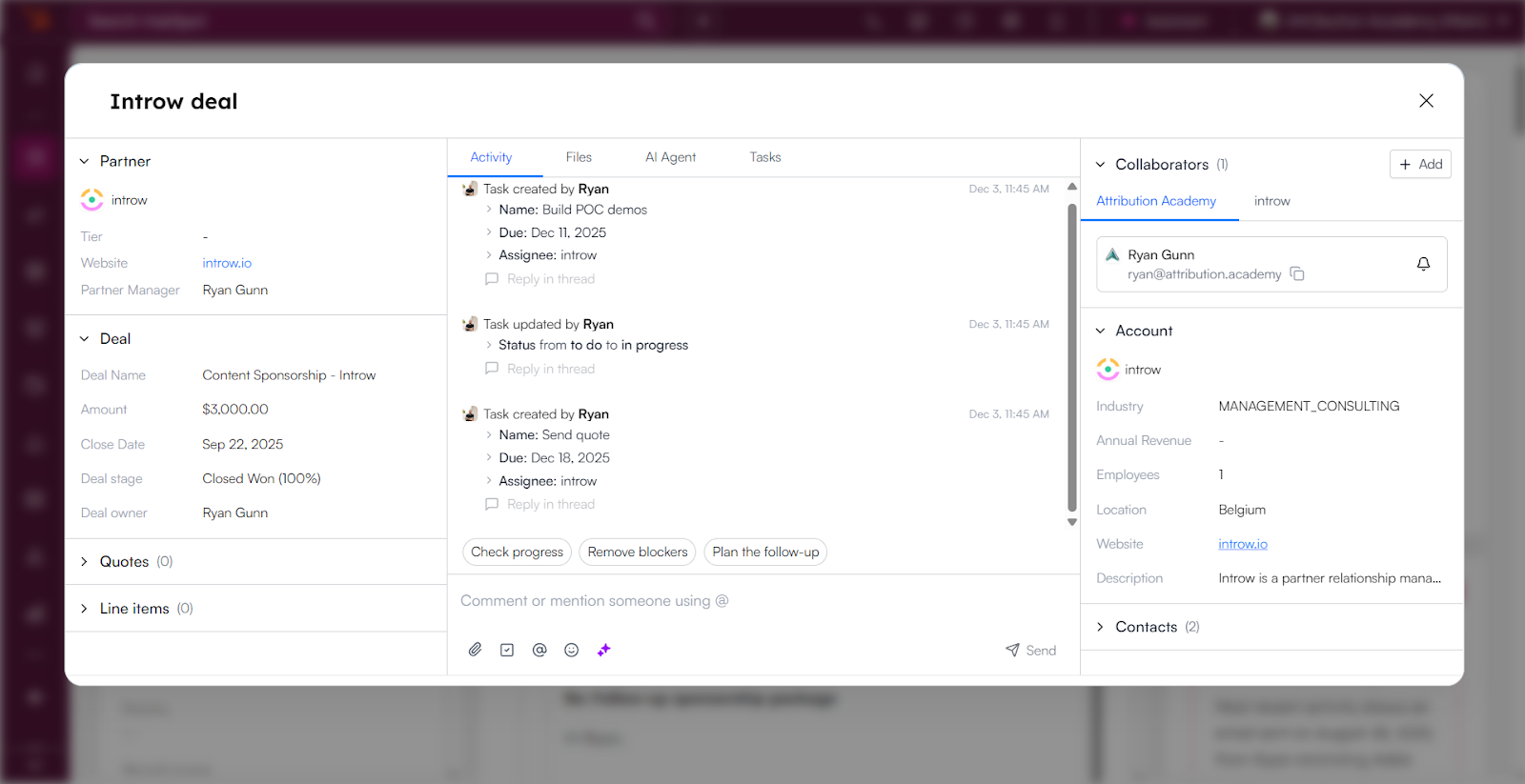
UI Extension Cards Introw leverages UI cards to manage deal collaborations directly from the HubSpot deal record. This means your sales reps don't have to log into a separate portal to communicate with partners. They can see partner activity, updates, and notes right in the sidebar where they are already working.
Flexible Data Architecture One of the most RevOps-friendly aspects of Introw is how it handles data. Depending on your maturity and license level, you can choose to integrate via Custom Properties (simpler, good for starting out), Company-Deal Association Labels (better, if you know what you are doing), or Custom Objects (robust, great for attribution).
Using Custom Objects allows you to associate multiple partners to a single deal or track complex partnership histories without cluttering your standard Deal properties. If I have one complaint, it’s that the Custom Object route definitely requires more lift to set up than the property sync. You have to actually think through your data model rather than just clicking "install." But honestly, the payoff of having clean attribution data is worth the extra hour of whiteboarding.
Other functionalities include: Content enablement and tracking, an AI-powered support agent, an AI-enabled LMS to train and certify partners, and off-portal engagement via email and Slack.
3 Use Cases to Operationalize Your Partner Program
Here is how you can actually put this to work to drive revenue (and save your sanity).
1. Automated Referral Tracking & Attribution
The hardest part of partnerships is proving they work. A partner emails you a lead, you manually create a deal, and six months later, nobody remembers who sent it.
Introw automates this with lead capture forms. When a partner submits a lead, Introw captures the data and automatically creates the Contact, Company, and/or Deal in HubSpot, depending on your setup.
Crucially, you can include hidden fields in these forms. This allows you to hard-code the "Lead Source" to "Referral" or stamp the Partner's ID onto the record automatically. No more manual data entry, no more "unknown" sources.
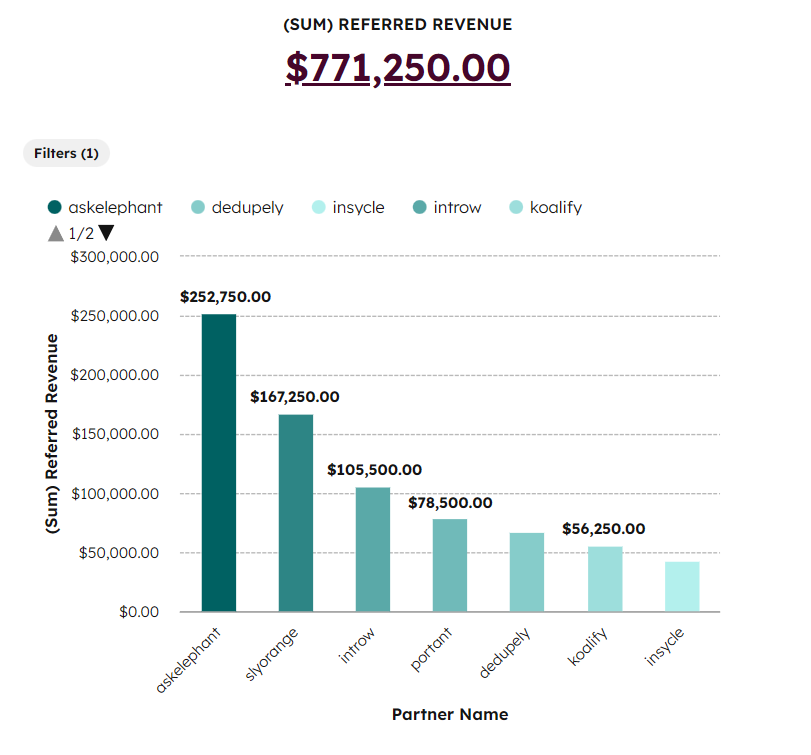
By using Introw’s Custom Object or Property associations, you can build native HubSpot reports that show exactly which partners are influencing revenue.
You can see:
-
Win Rate by Partner: Which partners send you the highest quality leads?
-
Revenue Generated: Total closed-won revenue attributed to specific partners.
-
Engagement: Which partners are actually logging into the portal and collaborating?
This lets you double down on the relationships that are mutually beneficial and let go of the ones that are just draining your resources.
2. AI-Powered Channel Conflict Resolution
If you have a large ecosystem with Resellers, Referrers, and Tech partners, you will eventually run into channel conflict. Two partners refer the same lead, or a partner refers a lead your outbound team is already working.
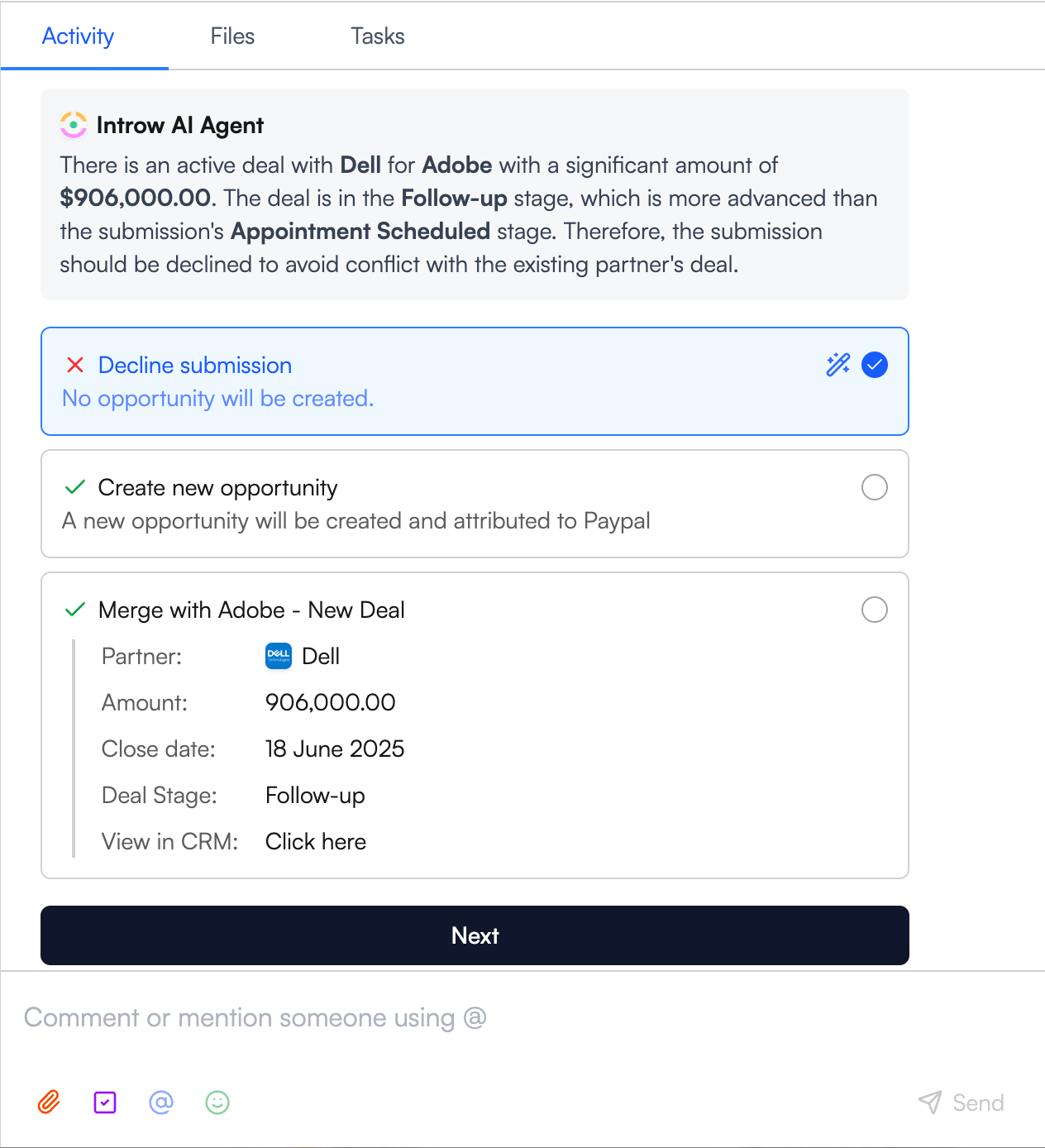
Introw has an AI agent specifically designed for this. It analyzes incoming referrals against your existing data to recognize conflict immediately. It can block automatic acceptance or flag the record for review, ensuring you don't end up paying double commissions or damaging relationships.
Here is how the workflow operates:
-
Ingestion & Analysis: As soon as a partner submits a lead via the portal or form, the AI agent analyzes the incoming referral against your live HubSpot data.
-
Conflict Detection: It instantly cross-references the lead against existing Deals, Contacts, and Companies to identify ownership issues.
-
Automated Intervention:
-
Blocking: If a clear conflict is found (e.g., an open Deal already exists), the agent can block the automatic acceptance of the referral.
-
Flagging: For grayer areas, it can flag the record for manual review by a partner manager before it pollutes your pipeline.
This not only helps you maintain clean data, but it also protects your margins and your reputation. By automating this check, you ensure you never end up paying double commissions on a single deal. More importantly, you maintain trust by having a transparent, system-driven reason for why a lead was rejected, rather than a subjective human decision.
3. Operationalizing Account Mapping (Introw + Crossbeam)
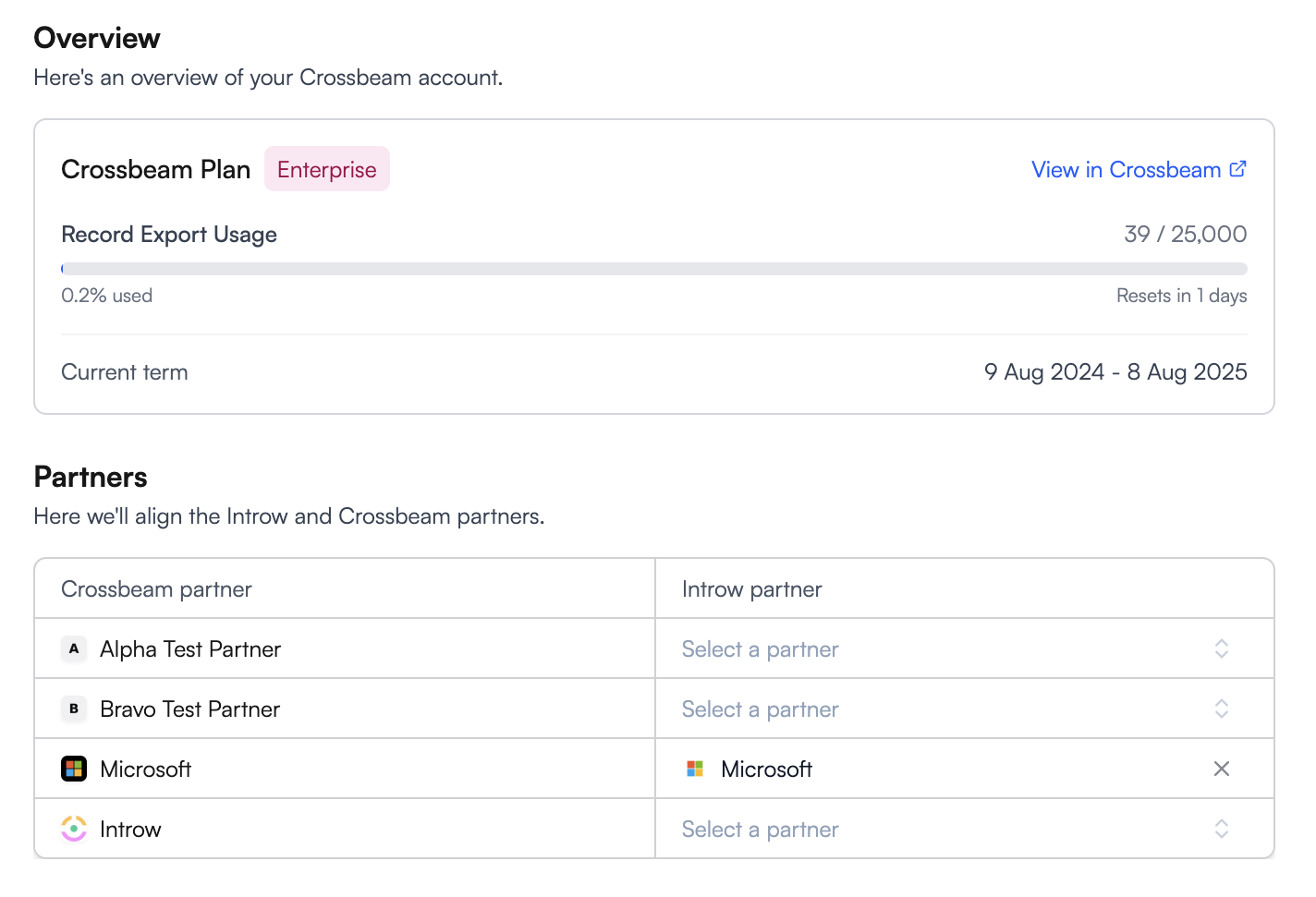
At first glance, you might think Introw and Crossbeam are competitors. That was my initial thought, too. But after exploring more, I found they are actually the peanut butter and jelly of the partnership stack. They are complementary tools that solve different parts of the same problem.
Crossbeam reveals exactly where the overlaps are between your prospects and your partners’. But knowing you have an overlap is only half the battle. Often, that data just sits in a dashboard or a spreadsheet. You see 50 overlapping accounts...what then?
This is where Introw comes in hand. It integrates with Crossbeam to take that raw intelligence and make it immediately actionable.
-
Crossbeam identifies that your partner has a relationship with a target account.
-
Introw operationalizes that insight by spinning up a shared workspace for collaboration.
By combining the two, you move from passive account mapping to active co-selling.

If you are a B2B SaaS company trying to scale your partner ecosystem, you cannot afford to manage it in spreadsheets. You need a tool that respects your data security while giving partners the transparency they need to help you sell.
Introw bridges that gap beautifully, and their commitment to HubSpot-native features like UI cards and Workflow actions makes them a natural fit for any Hubsessed reader.
This newsletter was sponsored by Introw. Interested in sponsoring Hubsessed? Email [email protected].





Responses